
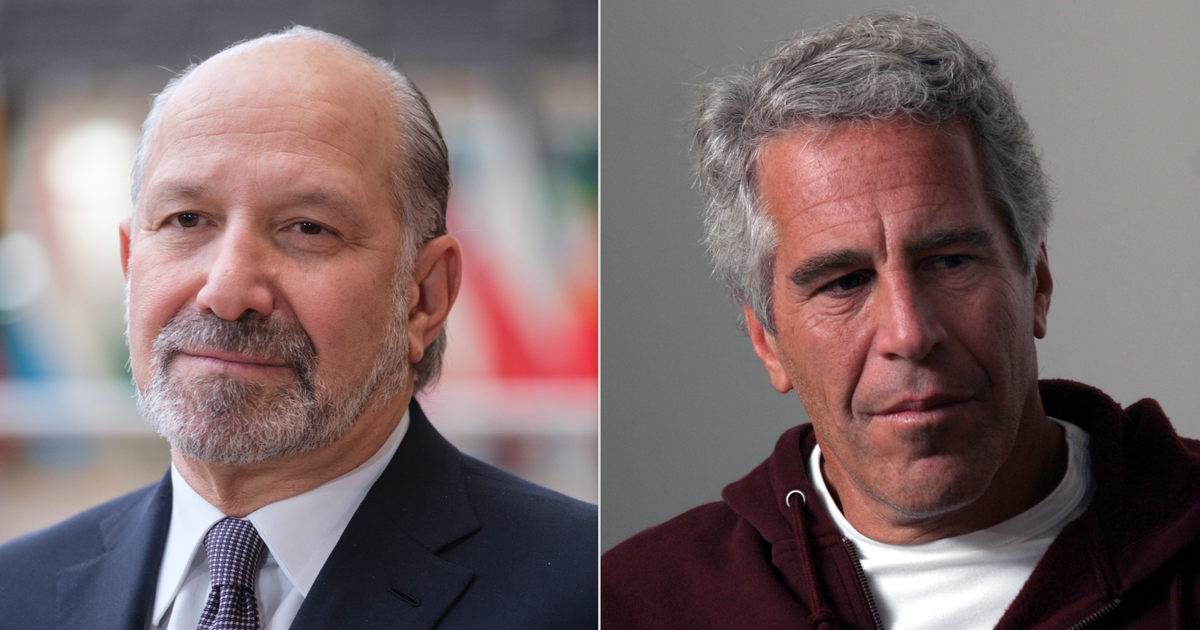
U.S. Commerce Secretary Howard Lutnick has stated that he had “limited interactions” with Jeffrey Epstein. However, recently released documents tell a more complex story, showing that the two were in business together as recently as 2014.
On December 28, 2012, Lutnick and Epstein each signed agreements on behalf of limited liability companies to acquire stakes in a now-shuttered advertising technology company called Adfin. The documents, released among the so-called Epstein files, reveal that Epstein signed for his Southern Trust Company, Inc., while Lutnick signed for a limited liability company named CVAFH I. In total, nine shareholders are listed in the contract. Interestingly, their signatures appear on neighboring pages.
Howard Lutnick, the former chairman of the financial services firm Cantor Fitzgerald, had at one time lived next door to Epstein. In October, Lutnick told the New York Post that he and his wife Allison had cut ties with Epstein in 2005 after taking a tour of Epstein’s New York townhouse. He said, “I will never be in the room with that disgusting person ever again.”
Despite this claim, evidence shows that Epstein and Lutnick maintained contact after 2005. Emails reveal that they arranged phone calls and planned to have drinks together in 2011. The following year, the Lutnick family—Howard, Allison, and their four children—planned a visit to Epstein’s private island, Little St. James.
On December 24, 2012, Lutnick was invited to lunch by Epstein. Afterward, Epstein’s assistant wrote, “It was nice seeing you.” Four days later, the Adfin deal was signed.
A source close to Lutnick told CBS News that Cantor Fitzgerald was a small minority investor in Adfin. The source added that, as a minority investor, Lutnick would not have had knowledge of who the other investors were.
Further correspondence shows that on January 8, 2013, Epstein had his assistant forward Lutnick a document related to casino legislation in the U.S. Virgin Islands, where Epstein owned an estate and had extensive business dealings. A spokesperson for Lutnick said he ignored that document.
The Commerce Department responded to inquiries by stating, “This is nothing more than a failing attempt by the legacy media to distract from the administration’s accomplishments, including securing trillions of dollars in investment, delivering historic trade deals, and fighting for the American worker. Secretary Lutnick had limited interactions with Mr. Epstein in the presence of his wife and has never been accused of wrongdoing.”
Correspondence concerning Adfin continued until at least 2014. One of the shareholders, David Mitchell, wrote to Epstein about additional fundraising involving Cantor Ventures, a venture capital subsidiary of Cantor Fitzgerald.
Howard Lutnick had been president and CEO of Cantor Fitzgerald since 1991 and was elevated to chairman in 1996. Notably, in 1996, Epstein sold a New York property located at 11 East 71st Street to an entity called Comet Trust. Two years later, Comet Trust sold the property to Lutnick, and it became his primary residence—right next door to Epstein’s New York City mansion.
By the time Epstein and Lutnick agreed to purchase stakes in Adfin, it had been more than four years since Epstein pleaded guilty to Florida state charges of procuring a child for prostitution and soliciting a prostitute. Although the case raised broader allegations of sex trafficking and victimization of girls, federal felony charges were not brought against Epstein until 2019. Epstein died in jail weeks after his federal arrest.
Following the release of the Epstein files, Lutnick is one among a broad international network of powerful individuals who have distanced themselves from Epstein. Nonetheless, many are now facing scrutiny to clarify relationships with Epstein that appear closer or longer-lasting than previously acknowledged.
Emails also show that Epstein was aware of the public relations challenges he posed to those close to him. In 2017, he agreed to donate $50,000 to a dinner held in honor of Lutnick. “Hope PR is OK,” Epstein wrote to billionaire hedge fund manager John Paulson, an organizer of the event. Epstein declined a donor-level table, writing that Lutnick could fill the seats.
Their relationship continued into 2018. Lutnick emailed Epstein to complain about an expansion plan for their neighboring Frick Collection art museum. Lutnick warned Epstein that the renovation might “block your sunlight and views,” urging him to respond: “You should put in a letter. I’m sending a lawyer. Don’t ignore this.”
The documented interactions demonstrate a more nuanced connection between Lutnick and Epstein than publicly acknowledged, raising questions about the extent and nature of their association.
https://www.cbsnews.com/news/howard-lutnick-jeffrey-epstein-in-business-together/