
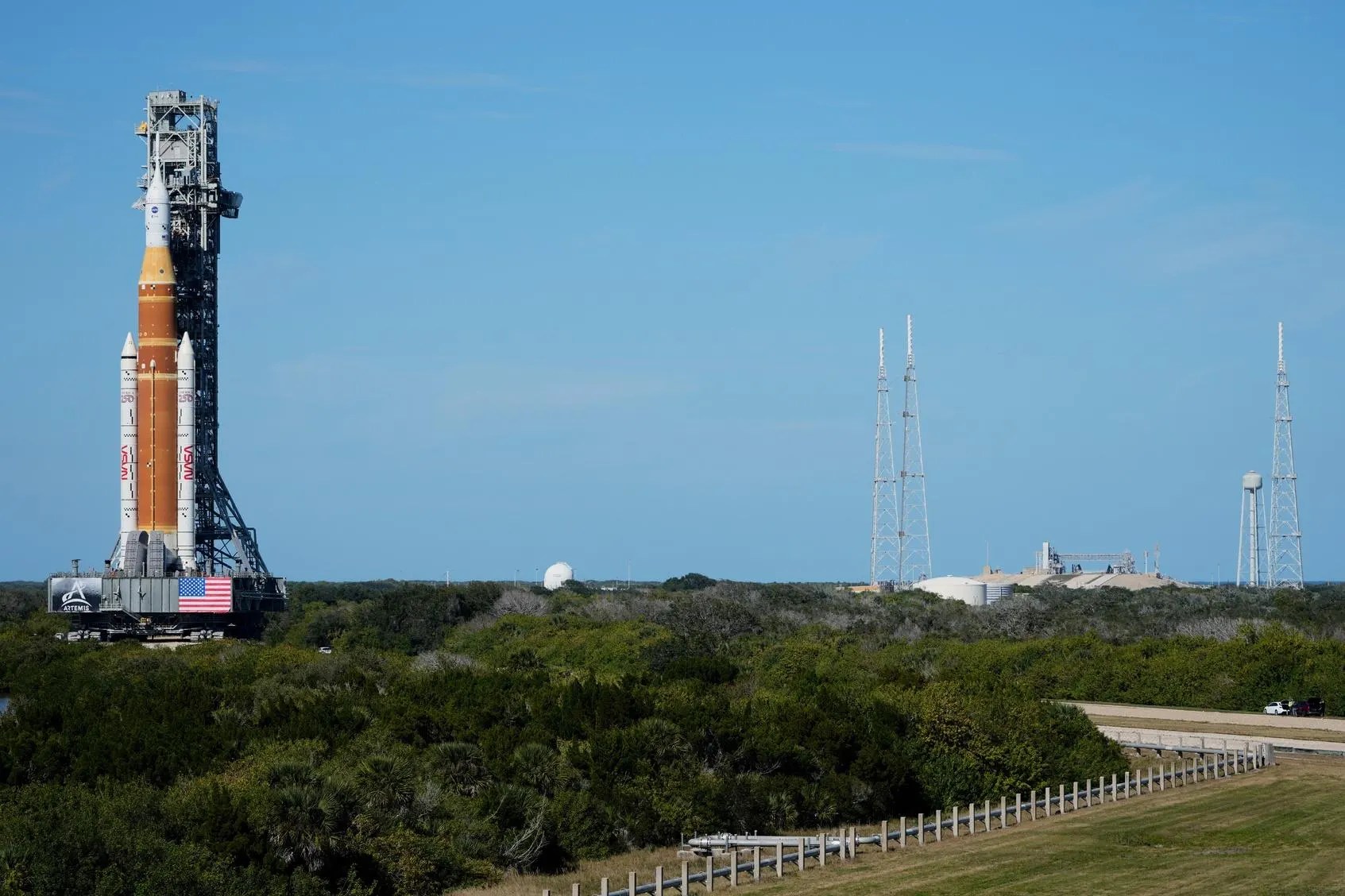
NASA has started to roll out Artemis, and there is quite the buzz on social media. Although I normally write about weather and climate topics, I spent twelve years of my career as a NASA scientist. Being NASA-attentive, I feel qualified to provide you with a little “101” on Artemis and explain why there is such excitement about this rollout happening this weekend.
Over the past year, the NASA ecosystem has endured blow after blow. Proposed budget cuts placed NASA and its industry partners in a precarious position, causing decades of science, engineering, and technical expertise to leave key centers around the nation. Even NASA’s largest library—a place I frequented during my tenure there—is closing. It contained historic and important documents, books, and resources vital to the agency’s mission.
However, the past few months have lifted NASA to new heights. There has been a surge of good news for the space agency—and by extension, for the nation. Jared Isaacman was recently confirmed as the NASA Administrator, bringing fresh leadership to the agency. This week, Congress passed a spending bill allocating $24.4 billion to NASA for fiscal year 2026. This amount is significantly more than the President’s budget request—great news for science, American space competitiveness, and halting a dangerous purge of highly skilled expertise.
All of this makes the rollout of Artemis even more exciting.
According to NASA’s press release, “The Artemis II Space Launch System (SLS) rocket and Orion spacecraft that will carry four astronauts around the Moon is rolling to Launch Complex 39B at NASA’s Kennedy Space Center in Florida.” The massive vehicle will take about 12 hours to complete its four-mile journey, which began at 7:04 a.m. EST on Saturday, January 17.
Once at the launch pad, NASA engineers will spend the coming days preparing the SLS and Orion for a wet dress rehearsal test. This includes loading all the propellants into the rocket to ensure everything is ready for flight. Once flight readiness is established, NASA states, “The earliest launch window for the approximately 10-day mission around the Moon opens on Friday, February 6.”
The Artemis II crew consists of:
– Commander Reid Wiseman
– Pilot Victor Glover
– Mission Specialist Christina Koch
– Canadian Space Agency Mission Specialist Jeremy Hansen
You can watch the enormous NASA crawler-transporter slowly move the 11-million-pound Artemis II rocket to the launch pad on NASA’s official YouTube channel.
NASA refers to the Moon as a “4.5-billion-year-old time capsule.” The Artemis program aims to lead the nation back to vigorous Moon exploration and establish a staging ground for deeper space missions. NASA explains, “We are exploring the Moon for scientific discovery, technology advancement, and to learn how to live and work on another world as we prepare for human missions to Mars.”
A quick overview of the Artemis missions so far:
– **Artemis I (2022):** An uncrewed mission that successfully placed the Orion spacecraft into orbit around the Moon.
– **Artemis II:** This upcoming crewed mission will allow astronauts to perform extensive testing in lunar orbit.
– **Artemis III:** Planned as the first Moon landing since the Apollo missions, it will bring astronauts back to the lunar surface.
NASA has plans to continue the Artemis program through Artemis X and beyond, paving the way for sustained human presence on the Moon and eventually Mars.
Stay tuned as NASA embarks on this exciting new chapter in space exploration!
https://bitcoinethereumnews.com/finance/nasa-rolled-out-artemis-heres-why-it-matters/