
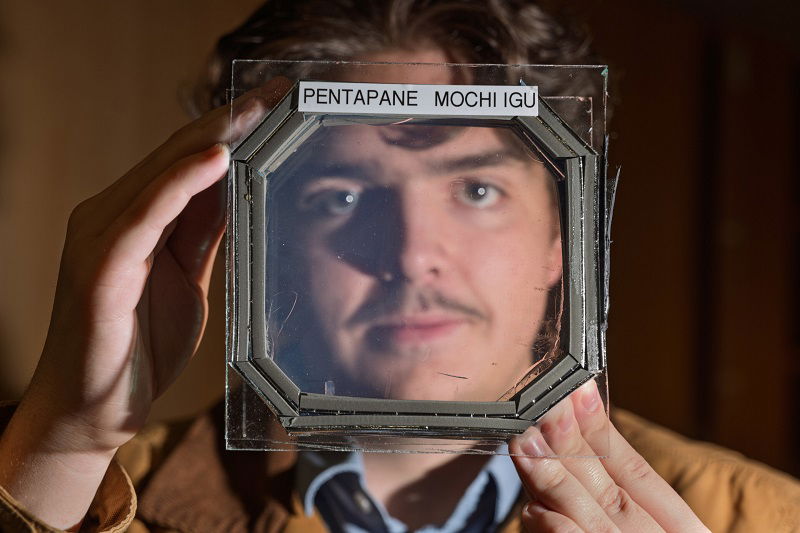
Physicists at the University of Colorado Boulder have developed a groundbreaking window insulation material that could dramatically reduce energy loss from buildings—all without obstructing the view outside. This nearly transparent material insulates so effectively that it can prevent heat from escaping through glass, which is typically one of the weakest points in most buildings.
### Introducing MOCHI: Mesoporous Optically Clear Heat Insulator
The innovative material is called Mesoporous Optically Clear Heat Insulator, or **MOCHI**. It can be fabricated as thin sheets or larger panels and easily installed on the inside of existing windows. Although MOCHI is currently produced only in laboratory settings and is not yet commercially available, researchers describe it as durable, clear, and surprisingly powerful.
“Windows need to let light through, but that makes them terrible at stopping heat,” said Ivan Smalyukh, a physics professor at CU Boulder and the senior author of the study published in *Science*. “Finding insulation that is both transparent and effective has been extremely difficult.”
### Why MOCHI Matters
Buildings are responsible for roughly 40 percent of global energy use, with a significant amount of this energy lost through windows. Glass windows tend to leak heat during the winter and let heat pour in during the summer. MOCHI is designed to slow this heat exchange, helping indoor spaces remain comfortable while reducing reliance on heating and cooling systems.
### How MOCHI Works
At first glance, MOCHI looks like a simple soft silicone-based gel. However, its internal structure is what sets it apart. The material contains a network of tiny air pockets—each thinner than a human hair. These mesopores trap air so efficiently that even a sheet just five millimeters thick can block intense heat.
In demonstrations, MOCHI was shown to withhold a flame without allowing the surface on the other side to heat up.
More than 90 percent of MOCHI’s volume is air, but the air is organized with extreme precision. This meticulous arrangement distinguishes it from aerogels—another type of high-performance insulation often used in spacecraft and other advanced applications. While aerogels also trap air, their pores are randomly arranged, scattering light and making them appear cloudy. In contrast, MOCHI’s pores are orderly, allowing light to pass straight through. As a result, the material reflects only about 0.2 percent of incoming light, making it nearly invisible on windows.
### The Science Behind MOCHI
The physics of MOCHI’s insulation is straightforward. Heat normally travels through gases when energized molecules collide and transfer energy. However, inside MOCHI’s tiny pores, these molecular collisions are severely limited because the gas molecules repeatedly hit the pore walls instead. This sharply reduces heat transfer through the material.
### Beyond Windows: Future Applications
The potential applications for MOCHI extend beyond window insulation. Researchers envision using MOCHI to trap solar heat for water heaters or building heating systems—even on days with limited sunlight. Such use could enhance the efficiency and affordability of renewable energy systems.
### Looking Ahead
For now, MOCHI remains a laboratory invention. Its production is currently slow and complex, although the raw materials are relatively inexpensive. Professor Smalyukh is optimistic that the manufacturing process can be simplified for large-scale production.
If this happens, the future of energy-efficient buildings could look very different—and much clearer.
https://knowridge.com/2025/12/scientists-create-nearly-invisible-window-insulation-that-blocks-heat/