
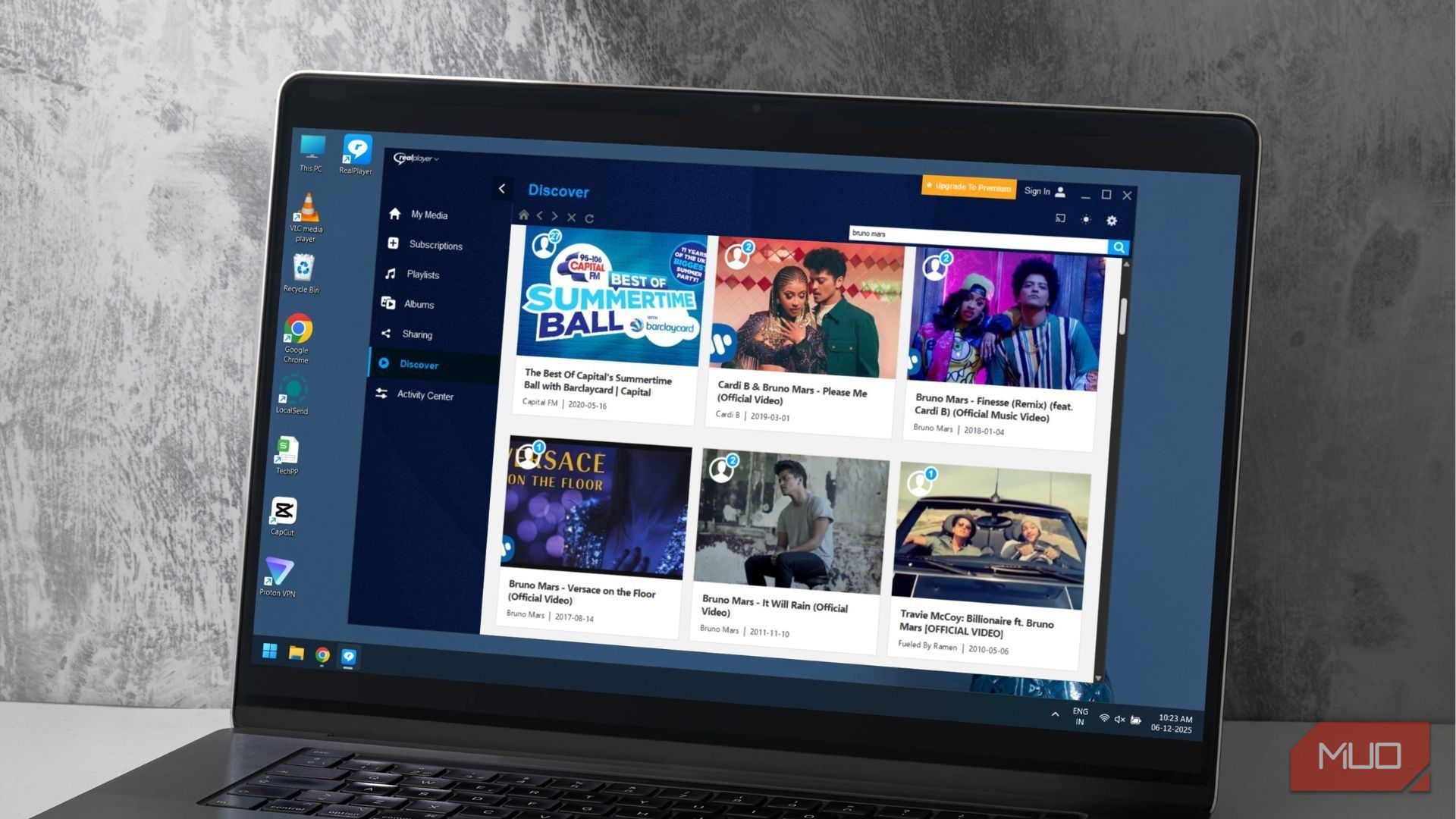
I have been using a mobile phone since the early 2000s, but my journey with smartphones started with the Nokia 6600. Of course, it came preloaded with RealPlayer, a versatile media player that could run multiple audio and video file formats. It was like the VLC of those times and was a perfect fit for desktops as well.
However, with the evolution of phones into smartphones and our transition into the cloud streaming era, RealPlayer seems to have vanished from the scene. If you thought that, then you’re wrong. RealPlayer is still alive and now has features that could give the best Android video players a run for their money.
## The Video Player That Tried Its Hand at Everything
### The First Audio-Streaming Player, But It Couldn’t Capitalize on It
Back in 1995, RealNetworks, the company owned by Robert Denis Glaser, introduced RealAudio Player. It was the first PC music player that could stream audio over the internet. It was lightweight, fast (for those times), and had minimal buffering, allowing users to enjoy media without downloading it first.
Every major online media powerhouse, including the BBC, CNN, and various sports leagues, used RealNetworks to broadcast content. In its later years, RealAudio Player received multiple upgrades, including additional features with the paid version. The company entered into agreements with major companies to deliver the best media experience and content on its platform.
RealPlayer became so popular that by 2000, there were over 95 million users, and more than 85% of online media content was in the RealPlayer format.
Another attraction was its interface. Early versions of the player (1995-98) featured a Windows 95-ish interface with media controls inside a gray rectangular window. When the media was buffering or there was an internet issue, the status bar would flash messages like “Buffering” and “Net congestion.”
### The Decline: Bloatware and Distrust
However, from 2000 to 2010, the troubles for RealPlayer really began. The strategy to make RealPlayer an all-in-one player introduced bloatware and a cluttered UI. The player gained a full-blown web browser with news headlines, and it allowed users to burn CDs and manage them.
It was during this period that RealPlayer introduced skins. But the real downfall started when RealPlayer incorporated “relevant.exe,” which introduced ad pop-ups, along with “realsched.” This created distrust among users as their personal data was being tracked and used without their consent.
Another major blow came not from within the company but from Microsoft. RealPlayer sued Microsoft for anti-competitive practices, and the case was finally settled in 2005, with Microsoft paying RealNetworks $761 million.
Unfortunately, by the time Microsoft wrote the check, millions of Windows users had already been coaxed into using Windows Media Player as the default media player instead of RealPlayer. This shift in user habits was a huge setback for RealPlayer.
Meanwhile, Adobe Flash and Windows Media Player emerged as the preferred video players, and RealNetworks’ revenue plunged.
## RealPlayer Has Grown Up to Be a Mature Media Player
### More Than Just a Video Player, But With Paid Versions
The current version of RealPlayer—version 25—comes packed with features. For example, you can download videos from YouTube, Vimeo, Facebook, TikTok, and Instagram at the highest possible quality. You can even choose the language during download or playback.
You might still be asked whether you want to install the Opera browser during RealPlayer’s installation. The player lets you download videos in up to 8K resolution (available only with paid tiers), a feature not commonly available in many other media players or online tools.
The company has now removed ads and unnecessary pop-ups for paid users; however, the free plan still displays ads, and you need to pay at least $25 to remove them.
RealPlayer also offers AI features that enhance thumbnails, cast videos via Chromecast, and organize videos by people, allowing you to jump to specific scenes featuring the person you want. The player includes a live video recording feature, enabling users to capture live streams, concerts, or gaming sessions on YouTube without relying on third-party tools.
Better yet, RealPlayer is now available on Android and iOS platforms, in addition to Windows, so you can sync videos across your devices seamlessly.
## RealPlayer Still Holds Up in 2025 (and Hopefully Beyond)
### Not Trying to Be a Streaming Service, But an Actual Video Player
RealPlayer is no longer the software that tried to be a streaming agent or a web browser. For good reasons, it is focused on being a great video player.
One killer feature is the ability to download videos from major video streaming platforms, allowing you to build a library of personalized video content. This gives you the freedom to watch your favorite content offline or even after the video has been removed from the platform.
While it may have lost its crown as the default media player to Windows Media Player and now VLC, or lost the war to Netflix to become the streaming champion, RealPlayer still holds up and continues to survive.
—
RealPlayer’s evolution from a pioneering streaming player to a mature, feature-packed video player shows that it still has a place in the media consumption landscape today. Whether you want powerful downloading features, offline viewing, or cross-device sync, RealPlayer remains a viable option worth considering.
https://www.makeuseof.com/realplayer-iconic-90s-media-player-was-dead/